

The Role of 3D Technology, AI and Digital Twins in Building a Human-Relevant Drug Development Ecosystem
By 3D GRAPHY NEWS | August 2026
India is entering an important new phase in pharmaceutical research: the gradual transition from conventional animal-based experimentation toward human-relevant, technology-driven alternatives.
While India has not yet completely eliminated animal testing in drug development, recent government initiatives, research programmes and regulatory developments indicate a significant movement in that direction. The country is investing in 3D tissue models, organoids, organ-on-chip systems, computational modelling and artificial intelligence (AI) that could eventually reduce—and in selected applications replace—the need for animal experiments.
The Indian Department of Biotechnology has specifically supported the development of 3D tissue and organoid models, including 3D-printed in-vitro systems for applications in drug discovery and disease research. DBT’s BRIC-inStem is developing 3D tissue and organoid models for developmental-toxicity testing that could potentially eliminate animal models for some areas of developmental toxicology.
From Animal Models to Human-Relevant Models
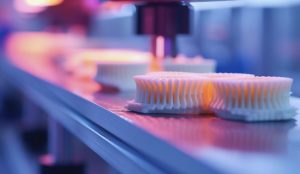
For decades, pharmaceutical companies have relied on laboratory animals to understand how potential medicines behave inside a living organism. Animal studies remain an important part of many regulatory pathways, but they have limitations: biological differences between species can make it difficult to predict how a drug will behave in humans.
The emerging generation of New Approach Methodologies (NAMs) provides another route.
These include:
- 3D cell cultures and organoids
- Organ-on-chip and tissue-on-chip technologies
- 3D bioprinted human tissues
- Computational toxicology
- AI-based drug discovery
- Physiologically based pharmacokinetic modelling
- Machine-learning prediction of drug toxicity and efficacy
- AI-enabled digital twins
A recent Indian landscape analysis identified organ-on-chip models, organoids and computational simulations among the technologies capable of supporting a transition away from traditional animal models.
Why 3D Technology Matters
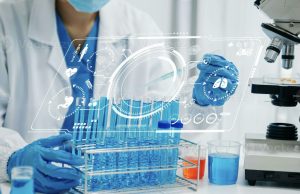
Traditional two-dimensional cell cultures grow cells on a flat surface. Human organs, however, are three-dimensional structures in which cells interact with neighbouring cells, extracellular matrices, blood-flow-like environments and biochemical signals.
3D technology attempts to recreate more of this biological complexity.
Organoids can form miniature, simplified versions of tissues and organs. 3D bioprinting can arrange living cells and biomaterials into tissue-like structures. Organ-on-chip platforms can combine human cells with microfluidic systems to reproduce aspects of an organ’s physical environment.
This creates an opportunity to test a drug against human-derived biological systems before moving to more complex stages of development.
The U.S. FDA also recognises organoids, spheroids, organs-on-chips and computer simulations as examples of modern alternatives that can contribute to non-animal drug development.
The Next Revolution: AI-Enabled Digital Twins
The most transformative possibility may come from combining 3D biological models with artificial intelligence and digital twins.
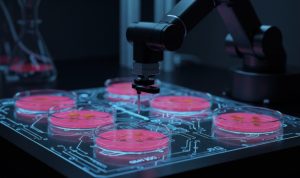
An AI-enabled drug-development digital twin can be envisioned as a dynamic computational representation of a biological system. Instead of relying on a single experiment, the system can integrate information from:
Patient data + molecular data + 3D tissue models + organ-on-chip experiments + imaging + pharmacology + historical clinical data → AI model → digital biological twin
The digital twin could then simulate how a drug might interact with a particular biological system.
Research published in Drug Discovery Today describes AI-powered digital twins and AI-enhanced organ-on-chip systems as emerging technologies for improving preclinical drug research and reducing reliance on animal testing.
A possible future workflow
- AI identifies a drug candidate
Machine-learning and generative-AI systems analyse molecular structures and biological targets. - 3D human tissue models provide experimental evidence
The candidate is tested on organoids, spheroids or 3D bioprinted tissues. - Organ-on-chip models simulate organ-level responses
Researchers examine absorption, toxicity, metabolism and other biological effects. - AI integrates the results
Data from multiple experiments are combined into predictive models. - A digital twin simulates additional scenarios
The system can virtually explore different doses, biological conditions and potential responses. - Only the most promising candidates progress
This could reduce unnecessary experiments and potentially decrease the number of animals required during development.
India’s Emerging Opportunity
India has a major strategic opportunity in this transition because it possesses a strong pharmaceutical sector, biotechnology ecosystem, engineering talent and expanding AI capabilities.
The government’s own 2025 response to Parliament acknowledged both the potential of 3D tissue and organoid technologies and the current challenge: India had not yet developed validation protocols for non-animal alternatives, while regulatory recognition and adoption were still developing.
That means the next stage is not simply inventing new technologies. India needs to establish scientific validation, reproducibility, standards and regulatory acceptance.
In March 2026, the Ministry of Health and Family Welfare also highlighted regulatory reforms designed to streamline drug development, including acceptance of pre-existing preclinical toxicity data to reduce the need for repeated animal testing.
Benefits of the 3D + AI + Digital Twin Model
- Reduced animal use
The most obvious benefit is the potential to replace or reduce experiments involving laboratory animals in suitable areas.
- Greater human relevance
Human-derived cells and tissues can potentially provide biological information that is more directly relevant to human patients.
- Faster drug development
AI can analyse enormous datasets rapidly, while computational models can evaluate many scenarios without physically repeating every experiment.
- Lower development costs
Reducing unsuccessful experimental programmes at an early stage could decrease the cost of developing medicines.
- Personalised medicine
Patient-derived organoids combined with patient-specific computational models could eventually support personalised drug-response predictions.
- Better integration of data
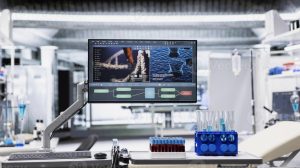
Digital twins can potentially connect molecular, cellular, tissue, organ and patient-level information within a single computational framework.
A New Indian Research Infrastructure
India could build a national ecosystem around these technologies by connecting:
IITs and engineering institutes
↓
Medical and biotechnology research centres
↓
3D bioprinting and organ-on-chip laboratories
↓
Pharmaceutical companies
↓
AI and computational-biology companies
↓
CDSCO and other regulatory institutions
Such an ecosystem could establish common standards for 3D tissues, organoids, digital models and AI predictions.
A particularly important priority will be creating validated Indian reference datasets. AI systems are only as reliable as the biological and clinical data used to train and test them.
The Regulatory Challenge
Technology alone cannot eliminate animal testing.
For a pharmaceutical company to replace an established animal study, regulators must be confident that the alternative method is scientifically valid, reproducible and capable of predicting relevant human outcomes.
India’s Department of Biotechnology has acknowledged that validation protocols for non-animal alternatives remain an important gap.
Therefore, India’s next historic step should be the creation of a formal National Framework for New Approach Methodologies (NAMs) covering:
- Validation standards
- Reference biological models
- 3D tissue quality standards
- Organ-on-chip performance criteria
- AI model validation
- Digital-twin verification
- Data provenance and traceability
- Regulatory submission standards
- Inter-laboratory reproducibility
- Post-market monitoring
The Road Ahead
The goal should not be to replace every animal experiment overnight. Instead, India can pursue a science-based replacement and reduction strategy in which validated technologies progressively take over appropriate testing tasks.
The combination of 3D biology + AI + digital twins could become one of the most important technological platforms in this transformation.
Imagine a future in which a pharmaceutical researcher can construct a 3D human tissue model, expose it to a candidate molecule, collect millions of biological measurements, feed those results into an AI system and update a digital twin that predicts how the treatment may behave under different conditions.
That future is still developing—but the building blocks already exist.
Conclusion
India’s movement toward non-animal drug development represents more than an animal-welfare initiative. It could become a major scientific and industrial opportunity.
3D bioprinting, organoids and organ-on-chip technologies can create increasingly sophisticated human-relevant experimental systems. AI can analyse their complex datasets. Digital twins can connect experimental evidence with computational prediction.
Together, these technologies could help India build a new model of pharmaceutical research—one that is faster, more predictive, more data-driven and progressively less dependent on animal experimentation.
The historic opportunity now lies in moving from promising laboratory technologies to validated, regulator-accepted and scalable platforms.
India has taken important steps. The next challenge is to turn those steps into a national technology and regulatory ecosystem capable of making animal-free drug development a practical reality wherever scientifically possible.
3D GRAPHY NEWS VIEW:

Dr. Shibu John,
Managing Editor & Founder,3D Graphy News
“ The future of drug development may not be defined by choosing between biology and technology. It may be defined by combining human 3D biology, artificial intelligence and digital twins to create a new generation of safer and more predictive medicines”.
INDUSTRY EXPERT VIEW’S :

Dr. Pallab Datta,
Assistant Professor, Department of Pharmaceutics, NIPER Kolkata
3D bioprinting and the pharma industry in the era of reduced animal and human trials
3D bioprinting is facilitating pharmaceutical development by creating in vitro human-relevant, high-fidelity tissue models that can for now reduce, and in future replace animal studies and early-phase human trials. The growing scientific evidences are causing substantial realignment with new regulatory policies. In 2025–2026, the U.S. FDA and other regulators announced roadmaps to phase out mandatory animal testing, promoting New Approach Methodologies (NAMs) such as organoids, organs-on-chips, and advanced in vitro systems. 3D bioprinting directly supports this paradigm by fabricating live, multicellular constructs that mimic human organ architecture and function.
“ 3D bioprinting has opened a transformative path toward human-relevant, ethical drug development, but its generalized regulatory adoption will depend on finding solutions for vascularization, standardization, and long-term predictive validation ”.
Bioprinted liver, kidney, heart, and tumor models allow more accurate toxicity and efficacy assessment than 2D cultures or rodents, improving translation to humans. For example, in our laboratory we have seen tissue models which can be used for studying cellular interactions of drug delivery systems. On the other hand, patient-derived cells can be printed into tissue patches for testing drug response before clinical use, reducing inter-individual variability and failed trials. Beyond tissues, 3D printing enables customized pills, polypills, and implants tailored to age, weight, and comorbidities, enhancing adherence and safety. Both FDA and MHRA encourage NAMs, bioprinted models provide the human biological context regulators now expect, potentially shortening approval timelines. By integrating bioprinted human tissues into early discovery and safety testing, pharma companies can cut costs, reduce ethical concerns, and accelerate candidate selection—ultimately bringing safer, more effective drugs to market faster. However, at present, long-term correlation between bioprinted model predictions and clinical outcomes have not yet been completely validated though some early studies have shown 78–84% accuracy in predicting patient responses (e.g., colorectal and rectal cancers). Thus, large-scale, prospective clinical validation across diverse drug classes and organs needs to be conducted along with research on batch-to-batch variability, scalability bottlenecks, high costs, and harmonization of regulatory standards for bioprinted tissues.

Dr. Subham Banerjee ,
Associate Professor, Department of Pharmaceutics, NIPER – Guwahati
How 3D Technology, AI, and Digital Twins will help Pharma Industry – with the new policy with elimination of animal trials
The regulatory shift away from mandatory animal testing is accelerating the adoption of a human-centered paradigm in pharmaceutical R&D, driven by AI, digital twins, and 3D technologies. AI algorithms process complex multi-omics and clinical data to build digital twins virtual replicas of human organs, metabolic pathways, or patient cohorts. These computational models simulate drug absorption, efficacy, and toxicity in silico, delivering predictions that are far more biologically relevant to humans than those from traditional animal models, which often fail during clinical translation.
“3D bioprinting creates living, human-derived tissue constructs and organ-on-a-chip systems. These micro-physiological structures replicate human vascularization and cellular interactions, allowing researchers to test compound safety directly on lab-grown human tissue rather than live animals.”
Combining predictive digital twins with 3D-bioprinted tissue models establishes a high-throughput, animal-free testing pipeline. This integration significantly lowers late-stage failure rates, reduces R&D costs, and dramatically shortens time-to-market while aligning with updated regulatory mandates.

Dr. Sumit Murab,
Associate Professor, IIT Mandi
3D printed in vitro disease models paves the way for drug candidate testing in a more human mimicking systems, that overcome various disadvantages of animal models including differences in physiology and molecular disease pathologies. These in vitro disease models can help screen drug candidates at a much faster rate, especially with the help of 3D printing of high throughput arrays, followed by assessing them with high throughput imaging platforms and data analysis with the help of autonomous AI driven systems. The pace of drug discovery in the coming years will be revolutionized because of these systems as they are already being formally adopted by the regulators worldwide. With further developments in organoids and their bioprinting into complex more anatomically and physiologically relevant in vitro tissue models, will further improve the efficacy of these systems.
Further, in vitro disease models with patient derived cells will help in personalized treatment strategies specially in cancer, where chemotherapy administration itself is detrimental to the patient’s body. Thus, testing the available chemotherapy agents on in vitro models, will help save life of many cancer patients, while minimizing the side effects.

Dr. Prakash Katakam,
Founder, 3DFying, Hyderabad
Beyond Animal Testing: How 3D Bioprinting Is Reshaping the Future of Drug Development.
The global pharmaceutical industry is entering a major transition in preclinical drug development. In 2025, the US FDA announced a roadmap to reduce, refine and potentially replace selected animal-testing requirements using New Approach Methodologies such as organoids, organ-on-chip systems and computational models. Importantly, this policy does not eliminate human clinical trials; rather, it aims to make the evidence entering clinical trials more human-relevant. This is where 3D bioprinting could become strategically important. Unlike conventional two-dimensional cell culture, bioprinting can place living human cells, extracellular-matrix materials and biomolecules in controlled three-dimensional architectures that mimic parts of liver, kidney, skin, intestine, heart or tumour tissue. Pharmaceutical companies could therefore test drug toxicity, tissue penetration, efficacy and dose-response relationships on engineered human tissues before exposing volunteers or patients to an experimental medicine.
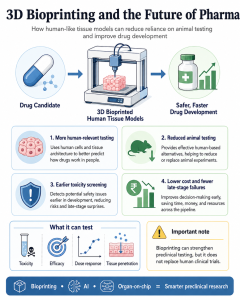
The potential industrial impact is substantial. Better human-relevant screening could eliminate weak candidates earlier, reduce expensive late-stage failures, shorten development timelines and decrease dependence on animal models. Patient-derived cells could also enable disease-specific and eventually personalised drug-response testing. Recent studies have already demonstrated drug screening in bioprinted skin and other tissue models. However, bioprinting should not be presented as an immediate replacement for the entire preclinical or clinical development pathway. Current models cannot fully reproduce whole-body pharmacokinetics, immune responses, endocrine signalling, long-term toxicity or complex interactions among organs. Reproducibility between printers, bioinks, cell sources and laboratories also remains a major regulatory challenge.
For the pharmaceutical industry, the realistic future is therefore not “no trials,” but smarter trials. Validated bioprinted human tissues, combined with organ-on-chip platforms, AI and existing clinical data, can create a stronger evidence chain before first-in-human studies. For India, investment in standardized bioprinting platforms and regulatory validation could create a new pharmaceutical testing industry while reducing animal use and improving translational accuracy and potentially strengthen India’s global research competitiveness.

Mr. Piyush Padmanabhan,
CEO & Director, Next Big Innovation Labs
Over the last decade, we’ve witnessed a rise in the diverse applications of bioprinting. A leading application, which we at NBIL worked on during our early days, was developing bioprinted skin models as alternatives to animals for drug and cosmetic testing. With the advent of modern pharmaceutical drug development regulations and standardization for testing models, bioprinted models of the human lung, liver, cornea, skin have garnered immense research interest. By spatially controlling the positioning of cells within a construct, researchers can now create standardised testing models for drug discovery and development. Another interesting development is the amalgamation of microfluidics with bioprinting to create organoid systems in dynamic flow environments. These systems can test drug candidates in pharma drug innovation and development pipelines and help develop personalised patient care specifically for cancer treatment.
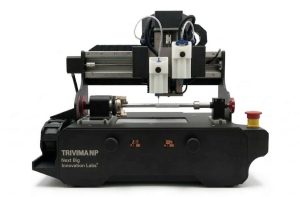
Trivima NP is NBIL’s flagship Bioprinter allowing users to print with diverse polymers on non-planar surfaces. Coupled with NBIL’s in-house Dhee software, Trivima NP’s applications range from novel biomaterial development to regenerative medicine to microfluidics and organoid applications.

Dr. Jikku Jose
Director, Scire Science Pvt Ltd,
As pharma moves toward human-relevant, non-animal drug development, 3D bioprinting is emerging as a powerful bridge betweendiscovery and clinical translation. By recreating tissue architecture using human cells and advanced biomaterials, bioprinted modelscan support drug efficacy, toxicity and response studies with greater biological relevance than conventional 2D cultures. At ScireScience, our mission is to accelerate this transition by developing indigenous, cell-friendly bioinks and 3D bioprinting solutionsthat enable researchers to build reliable human tissue models. Our Scire Chitra GelMA UVS Bioink represents this commitment—combining biomaterial innovation with accessibility, supporting India’s journey toward faster, safer and ethical pharmaceuticalresearch.
“The future of drug development lies in building human-relevant biology—not simply testing drugs on increasingly complex models.Bioink is the foundation of bioprinted biology. At Scire Science, our mission is to make advanced human-relevant 3D tissuemodels more accessible to researchers and the pharmaceutical industry.”
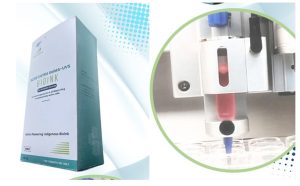
“ ScireChitra GelMA UVS Bioink – a indigenous GelMA – based bioink developed to support advanced 3D Bioprinting and human-relevant tissue modelling.”

Mr. Selvakumaran
Founder-Garuda3D,
We believe 3D bioprinting can play a very important role in changing the way medicines are developed and tested. Today, a major challenge in pharma is understanding how a drug will actually behave in the human body. Traditional 2D cell cultures and animal models cannot always give us the complete picture.
3D bioprinting gives researchers an opportunity to create tissue models that are much closer to the way human tissues are structured and function. This can help pharmaceutical companies study drug response, toxicity and effectiveness at a much earlier stage.
The real potential becomes even greater when bioprinting is combined with organoids, organ-on-chip technologies and AI. Together, these technologies can help researchers make better decisions before a drug reaches expensive and time-consuming stages of development.
At Garuda3D, we see this as an emerging area where engineering and biology have to come together. We are still at an early stage, and challenges such as standardisation, scalability and regulatory validation need to be addressed. But the direction is very clear. With the right ecosystem and validation, 3D bioprinting can help India move towards faster, more human-relevant and potentially less animal-dependent drug development.
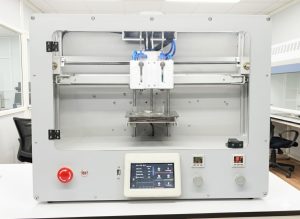
Garuda 3D – Bioprinter