

Advertise with us

3D GRAPHY NEWS

  • Home
  • Interviews
    • Text Interviews
    • video Interviews
  • R & D
  • Spotlight
    • Spotlight Text
    • Spotlight Videos
  • Medical
    • Medical Devices
    • Orthotics & Prosthetics
    • Pharma
    • Cardiology
    • Head & Neck
    • Neurology
    • Orthopaedics & Spine
    • Ayurveda
  • Dental
  • Engineering
    • Aerospace & Defence
    • Architecture & Construction
    • Marine & shipbuilding
    • Automotive
    • Energy
    • Heavy Industry
  • 3D Technologies
    • 3D Printing
    • 3D Scanning
    • 3D Software
    • 3D Simulation
    • 3D Design
    • 3D Visualisation
    • 3D Digital Twin
    • Artificial Intelligence
  • Materials
  • LifeStyle
    • Jewellery & Fashion
    • Gadgets
    • Pharma & Food
    • Art & Entertainment
  • About Us
    • About Us
    • Editors Desk
    • 3D Expert Desk
    • End users desk
    • Advertise with us
    • contact-us
  • News & Events
First ads
Second ads
Home» 3D Printing»Notre Dame researchers 3D print blood capillaries smaller than a human hair
Screenshot

Notre Dame researchers 3D print blood capillaries smaller than a human hair

Dr. Shibu John Sun Aug 2026 3D Printing, Materials, Medical Comments Off on Notre Dame researchers 3D print blood capillaries smaller than a human hair 97 Views

Facebook Twitter linkedin Pinterest WhatsAppt Telegram Viber More

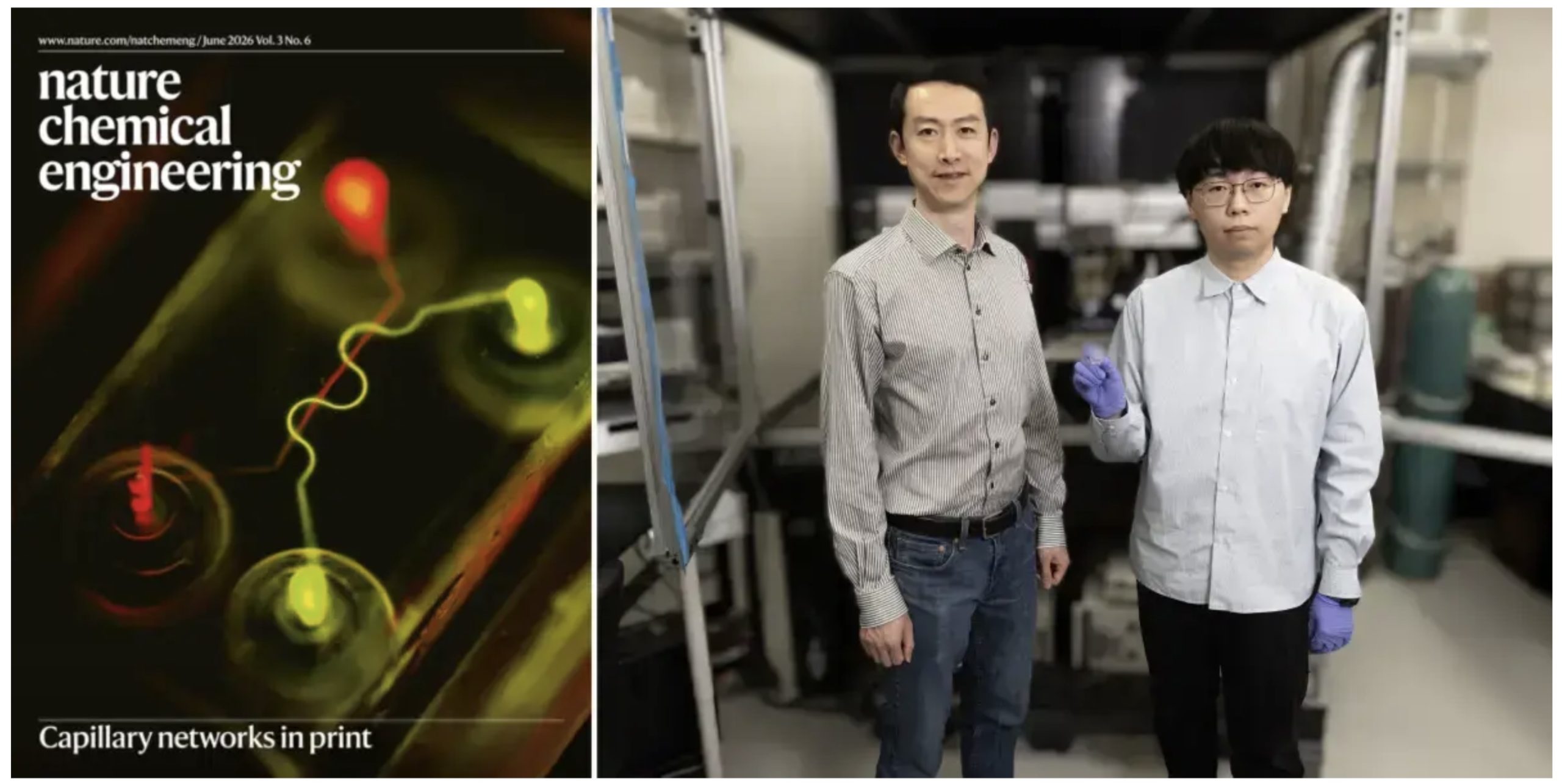
Researchers at the University of Notre Dame have developed a hybrid bioprinting technique capable of producing blood capillaries fewer than 10 micrometers in diameter, smaller than the finest human hair, clearing one of the biggest obstacles standing between scientists and lab-grown organs. The work, led by Yanliang Zhang, the Advanced Materials and Manufacturing Collegiate Professor in Notre Dame’s Department of Aerospace and Mechanical Engineering, appeared on the cover of Nature Chemical Engineering.

More than 100,000 people in the United States are currently waiting for an organ transplant, with a new candidate added every 10 minutes. Even successful transplants carry lifelong burdens: recipients must take immunosuppressive medications, face an elevated risk of infection, and live with the constant possibility of organ rejection. Bioprinting organs from a patient’s own cells would sidestep those problems, but replicating the body’s vascular networks, right down to the smallest capillaries, has stymied researchers for decades.

Zhang’s approach stitches together two distinct 3D printing methods. A soft, gel-like scaffold that mimics real tissue is built up layer by layer using extrusion printing. Then aerosol jet printing deposits thin gelatin threads inside the scaffold. The whole system is immersed in warm water, the gelatin liquifies and is flushed out, and the remaining channels range from hundreds of micrometers down to just a few micrometers in width.

Getting those sizes right consistently required machine learning. Small shifts in ink flow rate or sheath gas flow rate change the final channel dimensions, so the team built an autonomous optimization framework to find the right combination of parameters. “Machine learning is a very powerful tool that helps us to identify the optimal parameters much more quickly compared with the conventional trial-and-error method,” Zhang said.

Once the networks were printed, the researchers seeded select channels with endothelial cells, the same cells that line the body’s blood and lymphatic vessels. Those cells attached and spread along the inner walls, forming single-cell layers that replicate the barrier function of real human capillaries. “We are very pleased to see living cells rapidly attach and spread along the inner walls of the channels, ultimately replicating the barrier function of real human capillaries,” Zhang said. “It’s a big step forward in showing that our hybrid-printed networks are capable of supporting living tissue structures without leakage.”

The platform’s potential reaches beyond organ fabrication. Vascular models that accurately replicate capillary-scale architecture could serve as “organ-on-a-chip” test beds for evaluating drug safety and efficacy, and patient-specific cell sourcing could eventually allow therapeutic responses to be assessed in the model before full-scale treatment begins.

Zhang and collaborators at Harvard Medical School, led by Y. Shrike Zhang, associate professor of medicine at Harvard Medical School and Brigham and Women’s Hospital, have secured National Institutes of Health funding to build a more capable version of the hybrid bioprinter and push toward fabricating complete lab-grown organs, including the heart, kidney, and liver. “There are so many people waiting for an organ transplant, and the ability to print organs in the lab has the potential to transform lives by helping humans to live longer and live healthier,” Zhang said.

Source: news.nd.edu


2026-08-16
Facebook Twitter linkedin Pinterest WhatsAppt Telegram Viber More

Authors

Posted by : Dr. Shibu John
Previous Article :

3D Printed Coral-Inspired Scaffold Reprograms Immune Cells to Heal Bone Disease

Next Article :

EPFL 3D-prints tiny drones that fly on sound alone

Related Articles

FibreSeek Opens Pre-Sale of FibreSeeker 3 Continuous Carbon Fibre Printer

FibreSeek Opens Pre-Sale of FibreSeeker 3 Continuous Carbon Fibre Printer

Dr. Shibu John Thu Sep 2026
Divergent Builds America’s Most Advanced Industrial Metal 3D Printer, Monolith One, and Announces Second Factory

Divergent Builds America’s Most Advanced Industrial Metal 3D Printer, Monolith One, and Announces Second Factory

Dr. Shibu John Tue Sep 2026
University of Waterloo 3D Prints Diamond-Shaped Electrodes for Flow Batteries

University of Waterloo 3D Prints Diamond-Shaped Electrodes for Flow Batteries

Dr. Shibu John Sat Sep 2026
University of Maine Launches 30-Foot 3D-Printed Offshore Boat

University of Maine Launches 30-Foot 3D-Printed Offshore Boat

Dr. Shibu John Sat Sep 2026
US Navy Pushes for 3D Printing to Strengthen Submarine Fleet and Industrial Base

US Navy Pushes for 3D Printing to Strengthen Submarine Fleet and Industrial Base

Dr. Shibu John Mon Aug 2026
seco
first

Recent Posts

FibreSeek Opens Pre-Sale of FibreSeeker 3 Continuous Carbon Fibre Printer
3D Printing

FibreSeek Opens Pre-Sale of FibreSeeker 3 Continuous Carbon Fibre Printer

Dr. Shibu John Thu Sep 2026
Divergent Builds America’s Most Advanced Industrial Metal 3D Printer, Monolith One, and Announces Second Factory
3D Printing

Divergent Builds America’s Most Advanced Industrial Metal 3D Printer, Monolith One, and Announces Second Factory

Dr. Shibu John Tue Sep 2026
University of Waterloo 3D Prints Diamond-Shaped Electrodes for Flow Batteries
3D Printing

University of Waterloo 3D Prints Diamond-Shaped Electrodes for Flow Batteries

Dr. Shibu John Sat Sep 2026
University of Maine Launches 30-Foot 3D-Printed Offshore Boat
3D Printing

University of Maine Launches 30-Foot 3D-Printed Offshore Boat

Dr. Shibu John Sat Sep 2026
US Navy Pushes for 3D Printing to Strengthen Submarine Fleet and Industrial Base
3D Printing

US Navy Pushes for 3D Printing to Strengthen Submarine Fleet and Industrial Base

Dr. Shibu John Mon Aug 2026
FROM SPARE PARTS TO DIGITAL ASSETS FOR MARINE SECTOR
3D Digital Twin

FROM SPARE PARTS TO DIGITAL ASSETS FOR MARINE SECTOR

Dr. Shibu John Mon Aug 2026
Queen’s Belfast Team 3D Prints Dissolving Microneedle Patch for Skin Cancer
3D Printing

Queen’s Belfast Team 3D Prints Dissolving Microneedle Patch for Skin Cancer

Dr. Shibu John Sat Aug 2026
3D Printing, 3D Visualisation & AI-Enabled Digital Twins :  The Unseen Territory of Pharmaceutical Innovation
3D Design

3D Printing, 3D Visualisation & AI-Enabled Digital Twins : The Unseen Territory of Pharmaceutical Innovation

Dr. Shibu John Thu Aug 2026
WSU Team Prints NASA’s Copper Alloy at 500 Watts After AI Search
3D Printing

WSU Team Prints NASA’s Copper Alloy at 500 Watts After AI Search

Dr. Shibu John Thu Aug 2026
Engineers 3D Printed Permanent Zirconia Dental Crowns by Cutting a 100 Hours Process to 30 Minutes
3D Printing

Engineers 3D Printed Permanent Zirconia Dental Crowns by Cutting a 100 Hours Process to 30 Minutes

Dr. Shibu John Wed Aug 2026
3D-printing platform rapidly produces complex electric machines
3D Printing

3D-printing platform rapidly produces complex electric machines

Dr. Shibu John Tue Aug 2026

Advertisement

Advertisement


htmagazine
3D Graphy news is a information source for 3D Printing and 3d visualisation business

Follow us

Newsletter Subscription

Recent Posts

  • FibreSeek Opens Pre-Sale of FibreSeeker 3 Continuous Carbon Fibre Printer

    FibreSeek Opens Pre-Sale of FibreSeeker 3 Continuous Carbon Fibre Printer

    Dr. Shibu John Thu Sep 2026
  • Divergent Builds America’s Most Advanced Industrial Metal 3D Printer, Monolith One, and Announces Second Factory

    Divergent Builds America’s Most Advanced Industrial Metal 3D Printer, Monolith One, and Announces Second Factory

    Dr. Shibu John Tue Sep 2026
  • Interview With Mr. Ravindra Kapse, Director & Co- Founder, Srujon Intelligent Solutions Pvt Ltd

    Interview With Mr. Ravindra Kapse, Director & Co- Founder, Srujon Intelligent Solutions Pvt Ltd

    Dr. Shibu John Mon Sep 2026

Random Posts

FibreSeek Opens Pre-Sale of FibreSeeker 3 Continuous Carbon Fibre Printer

Divergent Builds America’s Most Advanced Industrial Metal 3D Printer, Monolith One, and Announces Second Factory

University of Waterloo 3D Prints Diamond-Shaped Electrodes for Flow Batteries

University of Maine Launches 30-Foot 3D-Printed Offshore Boat

US Navy Pushes for 3D Printing to Strengthen Submarine Fleet and Industrial Base

FROM SPARE PARTS TO DIGITAL ASSETS FOR MARINE SECTOR

Queen’s Belfast Team 3D Prints Dissolving Microneedle Patch for Skin Cancer

3D Printing, 3D Visualisation & AI-Enabled Digital Twins : The Unseen Territory of Pharmaceutical Innovation

WSU Team Prints NASA’s Copper Alloy at 500 Watts After AI Search

Engineers 3D Printed Permanent Zirconia Dental Crowns by Cutting a 100 Hours Process to 30 Minutes

Advertise with us Join Our WhatsApp Group
© Copyright 2024-30, All Rights Reserved
Powered by 3D GRAPHY LLP