

3D GRAPHY NEWS

  • Home
  • Interviews
    • Text Interviews
    • video Interviews
  • R & D
  • Spotlight
    • Spotlight Text
    • Spotlight Videos
  • Medical
  • Dental
  • Engineering
  • 3D Technologies
    • 3D Printing
    • 3D Scanning
    • 3D Software
    • 3D Simulation
    • 3D Design
    • 3D Visualisation
    • Materials
    • Digital Twin
  • News & Events
  • About Us
    • About Us
    • Editors Desk
    • 3D Expert Desk
    • End users desk
    • Advertise with us
    • contact-us
Home» 3D Printing»Organic Stabilizer Residue in MNP Inks Behind Loss of Conductivity in 3D Printed Electronics

Organic Stabilizer Residue in MNP Inks Behind Loss of Conductivity in 3D Printed Electronics

Dr. Shibu John Tue Jul 2024 3D Printing, 3D Technologies, Electronics, News & Events, Spotlight Text Leave a comment 507 Views

Facebook Twitter linkedin Pinterest WhatsAppt Telegram Viber More

According to the latest findings of a new study by the University of Nottingham and the National Physical Laboratory, very thin layers of organic stabilizer residue in metal nanoparticle (MNP) inks are behind a loss of conductivity in 3D printed materials and electronic devices. Inks containing metal nanoparticles are among the most commonly-used conductive materials for printed electronics. Ink-jetting layers of MNP materials allows for unpreceded design flexibility, rapid processing and 3D printing of functional electronic devices such as sensors, solar panels, LED displays, transistors and smart textiles.

Inkjet 3D printing of metals typically form a solid printed object via a two-step process: solvent evaporation upon printing (pinning) and subsequent low-temperature consolidation of nanoparticles (sintering). The low temperature is important as in many applications the nanoparticles are co-printed with other functional/structural organic materials that are sensitive to higher temperatures.

However, layers produced by inkjet printing of metal nanoparticles have different electrical conductivity between horizontal and vertical directions. This effect is known as functional anisotropy and is a long-standing problem for the 3D printing of functional electronic devices, preventing its use for advanced applications.

It was previously thought that reduced vertical conductivity through a printed device is mainly caused by shape and physical continuity problems at the interfaces of the constituent nanoparticles (at the very small micro and nanoscale). However, Nottingham researchers used silver nanoparticles to show, for the first time, that it is caused by organic chemical residues in the inks.

These residues, which are added to the inks to help stabilize the nanomaterials, lead to the formation of low-conducting, very thin nanoscale layers which interfere with the electrical conductivity of the printed sample in the vertical direction. With a clearer understanding of the distribution of residual organic additives within printed layers, the researchers hope to go on to define new techniques and develop new ink formulations to overcome functional anisotropy of inkjet-based 3D printed electronics.

Lead author, CfAM Research Fellow Dr. Gustavo Trindade, said, “The conductivity of inkjet-printed metal nanoparticles is known to be dependent on processing temperature and have been previously attributed to changes in the shape and porosity of clustered nanoparticles, with the role of organic residues being only speculated.”

“This new insight enables the development of routes to overcome functional anisotropy in inkjet-based nanoparticles, and will therefore improve uptake of this potentially transformational technology, making it competitive with conventional manufacturing. Our approach is transferable to other nanomaterial-based inks including those containing graphene and functionalised nanocrystals, and will enable the development and exploitation of both 2D and 3D printed electronics like flexible and wearable sensors, solar panels, LED displays, transistors and smart textiles“, says Dr Gustavo Trindade, a research fellow at the Centre for Additive Manufacturing.

The study was carried out by the Centre for Additive Manufacturing (CfAM), under the £5.85m EPSRC-funded Program Grant, “Enabling Next Generation Additive Manufacturing”. Their findings are published in a new paper ‘Residual Polymer Stabilizer Causes Anisotropic Electrical Conductivity During Inkjet Printing of Metal Nanoparticles’ in the Nature journal Communications Materials.

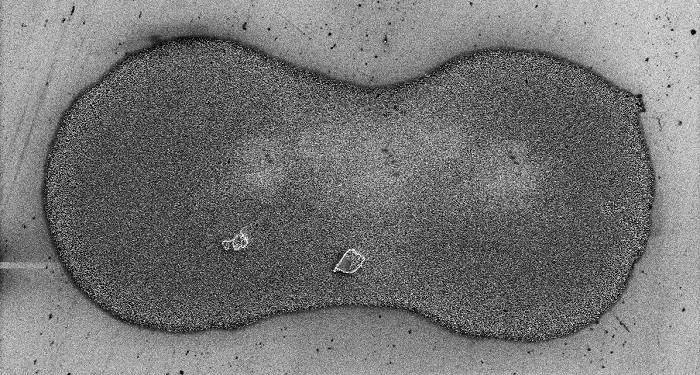
The researchers used the unique chemical sensitivity of a state-of-the-art 3D orbiSIMS instrument owned by the University of Nottingham. The Nottingham orbiSIMS – the only one at a UK university – allows label-free 3D chemical imaging of materials with very high resolution, revealing insights that have informed this study.

2024-07-16
Facebook Twitter linkedin Pinterest WhatsAppt Telegram Viber More

Authors

Posted by : Dr. Shibu John
Previous Article :

nScrypt 3D Prints Phased Array Antenna on Curved Surface for US Air Force

Next Article :

Fortify and Rogers Collaborates to Develop 3D Printed Dielectric Material Systems for RF Devices

Related Articles

Marines 3D-Print Coast Guard Replacement Part in Hours During South Korea Exercise

Marines 3D-Print Coast Guard Replacement Part in Hours During South Korea Exercise

Dr. Shibu John Mon Jul 2026
Sandvik acquires CAM re-sellers in India and US

Sandvik acquires CAM re-sellers in India and US

Dr. Shibu John Sun Jul 2026
BASF Starts Up World’s First Industrial-Scale 3D Printed Catalyst Plant in Ludwigshafen

BASF Starts Up World’s First Industrial-Scale 3D Printed Catalyst Plant in Ludwigshafen

Dr. Shibu John Sun Jul 2026
BENTU Design 3D Prints Street Furniture From Demolished Urban Village Waste

BENTU Design 3D Prints Street Furniture From Demolished Urban Village Waste

Dr. Shibu John Sun Jul 2026
Beehive Industries Wins $30 Million Air Force Contract for 3D-Printed Turbojets

Beehive Industries Wins $30 Million Air Force Contract for 3D-Printed Turbojets

Dr. Shibu John Sun Jul 2026

Leave a Reply Cancel reply

Your email address will not be published. Required fields are marked *

Recent Posts

Marines 3D-Print Coast Guard Replacement Part in Hours During South Korea Exercise
3D Design

Marines 3D-Print Coast Guard Replacement Part in Hours During South Korea Exercise

Dr. Shibu John Mon Jul 2026
BASF Starts Up World’s First Industrial-Scale 3D Printed Catalyst Plant in Ludwigshafen
3D Printing

BASF Starts Up World’s First Industrial-Scale 3D Printed Catalyst Plant in Ludwigshafen

Dr. Shibu John Sun Jul 2026
BENTU Design 3D Prints Street Furniture From Demolished Urban Village Waste
3D Design

BENTU Design 3D Prints Street Furniture From Demolished Urban Village Waste

Dr. Shibu John Sun Jul 2026
Beehive Industries Wins $30 Million Air Force Contract for 3D-Printed Turbojets
3D Printing

Beehive Industries Wins $30 Million Air Force Contract for 3D-Printed Turbojets

Dr. Shibu John Sun Jul 2026
Holcim & COBOD Complete Europe’s Largest Residential Build in 12 Months
3D Printing

Holcim & COBOD Complete Europe’s Largest Residential Build in 12 Months

Dr. Shibu John Sun Jul 2026
Ottobock Launches 3D Printed Silicone Liner to Address Prosthesis Fit Problems Affecting 68% of Users
3D Printing

Ottobock Launches 3D Printed Silicone Liner to Address Prosthesis Fit Problems Affecting 68% of Users

Dr. Shibu John Sun Jul 2026
Rotterdam Studio Covers Dutch Transformer Station in 322 Custom 3D Printed Ceramic Tiles
3D Printing

Rotterdam Studio Covers Dutch Transformer Station in 322 Custom 3D Printed Ceramic Tiles

Dr. Shibu John Sun Jul 2026
Inside Vietnam’s First Connected Surgical Ecosystem, and the Role 3D Printing Plays Within It
3D Printing

Inside Vietnam’s First Connected Surgical Ecosystem, and the Role 3D Printing Plays Within It

Dr. Shibu John Sun Jul 2026
Czech Scientists Test 3D-Printed Titanium Implants That Release Drugs Inside the Body
3D Printing

Czech Scientists Test 3D-Printed Titanium Implants That Release Drugs Inside the Body

Dr. Shibu John Sun Jul 2026
Ford and Sharrow Engineering Cut Marine Propeller Production Time from 130 Days to Two Weeks
3D Design

Ford and Sharrow Engineering Cut Marine Propeller Production Time from 130 Days to Two Weeks

Dr. Shibu John Fri Jul 2026
Superfeet Launches iPhone Scanning for Custom 3D-Printed Insoles
3D Printing

Superfeet Launches iPhone Scanning for Custom 3D-Printed Insoles

Dr. Shibu John Fri Jul 2026

htmagazine
3D Graphy news is a information source for 3D Printing and 3d visualisation business

Follow us

Newsletter Subscription

Recent Posts

  • Marines 3D-Print Coast Guard Replacement Part in Hours During South Korea Exercise

    Marines 3D-Print Coast Guard Replacement Part in Hours During South Korea Exercise

    Dr. Shibu John Mon Jul 2026
  • Sandvik acquires CAM re-sellers in India and US

    Sandvik acquires CAM re-sellers in India and US

    Dr. Shibu John Sun Jul 2026
  • BASF Starts Up World’s First Industrial-Scale 3D Printed Catalyst Plant in Ludwigshafen

    BASF Starts Up World’s First Industrial-Scale 3D Printed Catalyst Plant in Ludwigshafen

    Dr. Shibu John Sun Jul 2026

Random Posts

Marines 3D-Print Coast Guard Replacement Part in Hours During South Korea Exercise

Marines 3D-Print Coast Guard Replacement Part in Hours During South Korea Exercise

BASF Starts Up World’s First Industrial-Scale 3D Printed Catalyst Plant in Ludwigshafen

BASF Starts Up World’s First Industrial-Scale 3D Printed Catalyst Plant in Ludwigshafen

BENTU Design 3D Prints Street Furniture From Demolished Urban Village Waste

BENTU Design 3D Prints Street Furniture From Demolished Urban Village Waste

Beehive Industries Wins $30 Million Air Force Contract for 3D-Printed Turbojets

Beehive Industries Wins $30 Million Air Force Contract for 3D-Printed Turbojets

Holcim & COBOD Complete Europe’s Largest Residential Build in 12 Months

Holcim & COBOD Complete Europe’s Largest Residential Build in 12 Months

Ottobock Launches 3D Printed Silicone Liner to Address Prosthesis Fit Problems Affecting 68% of Users

Ottobock Launches 3D Printed Silicone Liner to Address Prosthesis Fit Problems Affecting 68% of Users

Rotterdam Studio Covers Dutch Transformer Station in 322 Custom 3D Printed Ceramic Tiles

Rotterdam Studio Covers Dutch Transformer Station in 322 Custom 3D Printed Ceramic Tiles

Inside Vietnam’s First Connected Surgical Ecosystem, and the Role 3D Printing Plays Within It

Inside Vietnam’s First Connected Surgical Ecosystem, and the Role 3D Printing Plays Within It

Czech Scientists Test 3D-Printed Titanium Implants That Release Drugs Inside the Body

Czech Scientists Test 3D-Printed Titanium Implants That Release Drugs Inside the Body

Ford and Sharrow Engineering Cut Marine Propeller Production Time from 130 Days to Two Weeks

Ford and Sharrow Engineering Cut Marine Propeller Production Time from 130 Days to Two Weeks

Tags

3D Design 3D Software Business Dental Engineering Medical News & Events Technology Trending Video Interviews
© Copyright 2024-30, All Rights Reserved
Powered by 3D GRAPHY LLP