

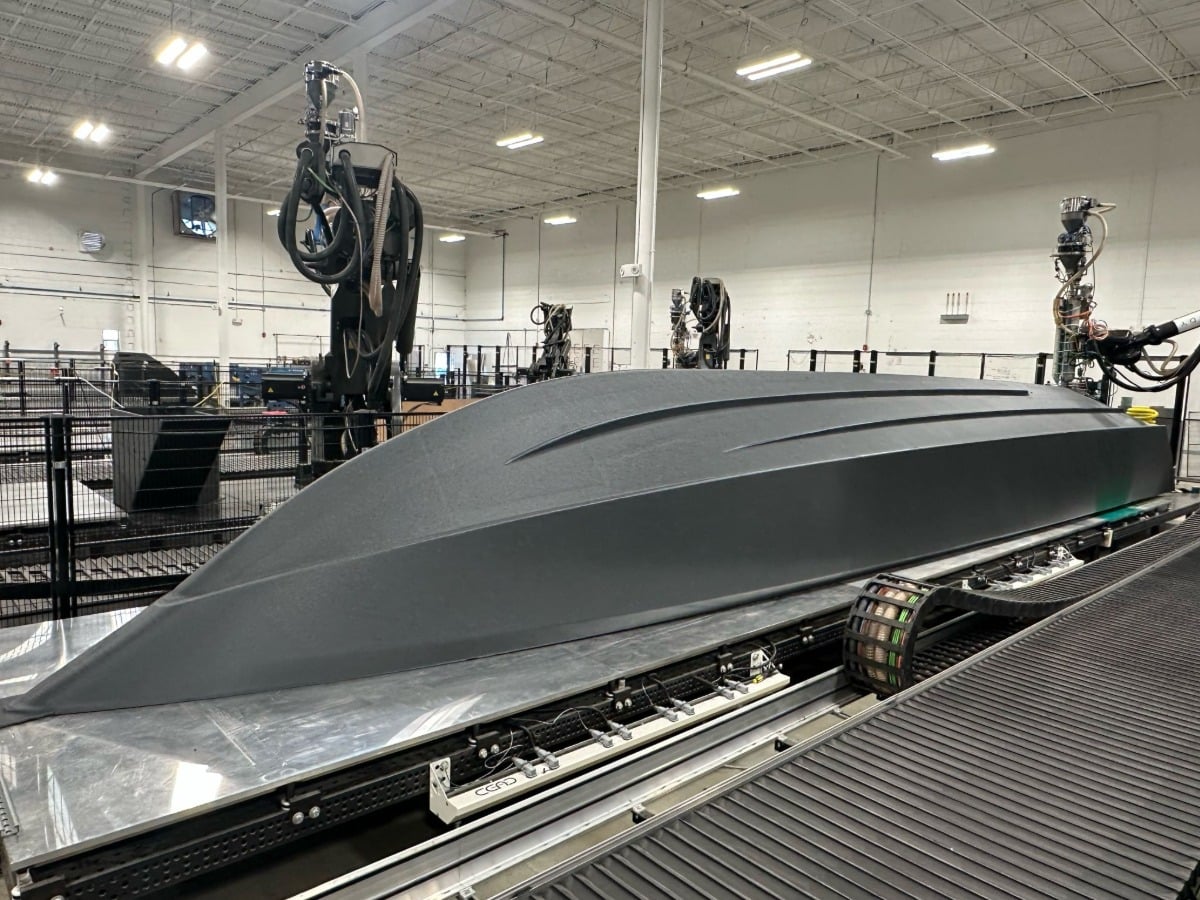
Credit: Haddy
A St. Petersburg, Florida manufacturing company has used large-format robotic 3D printing to produce a military drone boat, marking the latest expansion of a technology that started with printing furniture and is now reshaping how the U.S. defense industry builds unmanned vessels.
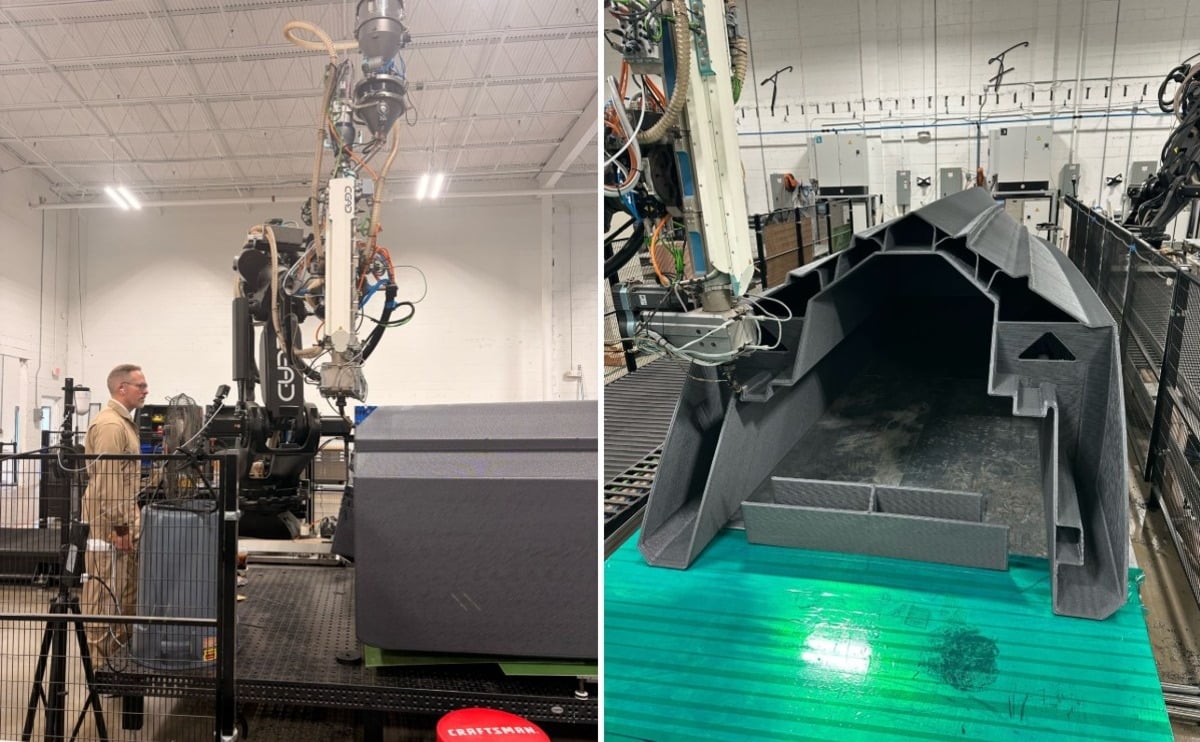
Haddy announced Saturday that it has completed the TF-179 Drone Boat using industrial-scale additive manufacturing, a process in which robotic arms build up an object layer by layer from raw material rather than cutting or molding it from a block. The company didn’t disclose which customer commissioned the vessel or what mission it’s intended to perform.
Haddy operates out of a roughly 30,000 square foot facility in downtown St. Petersburg equipped with eight large-format additive manufacturing systems built by the Dutch robotics firm CEAD, seven of which run on rails to extend their reach for producing especially large parts. Founded in 2022 by Jay Rogers, a former Marine and Princeton graduate who previously ran a similar 3D-printing venture called Local Motors, the company opened what it describes as the world’s largest 3D printing facility by total throughput and machine count in April 2025.
“The maritime industry is redefining how vessels are designed and manufactured. The TF-179 Drone Boat is part of that evolution. Produced using large-format robotic additive manufacturing, projects like this demonstrate how digital manufacturing is enabling more agile development cycles, greater design flexibility, and a faster path from concept to deployment,” Haddy said in a statement. “The ability to rapidly produce, evaluate, and refine complex systems is becoming an increasingly important advantage.”
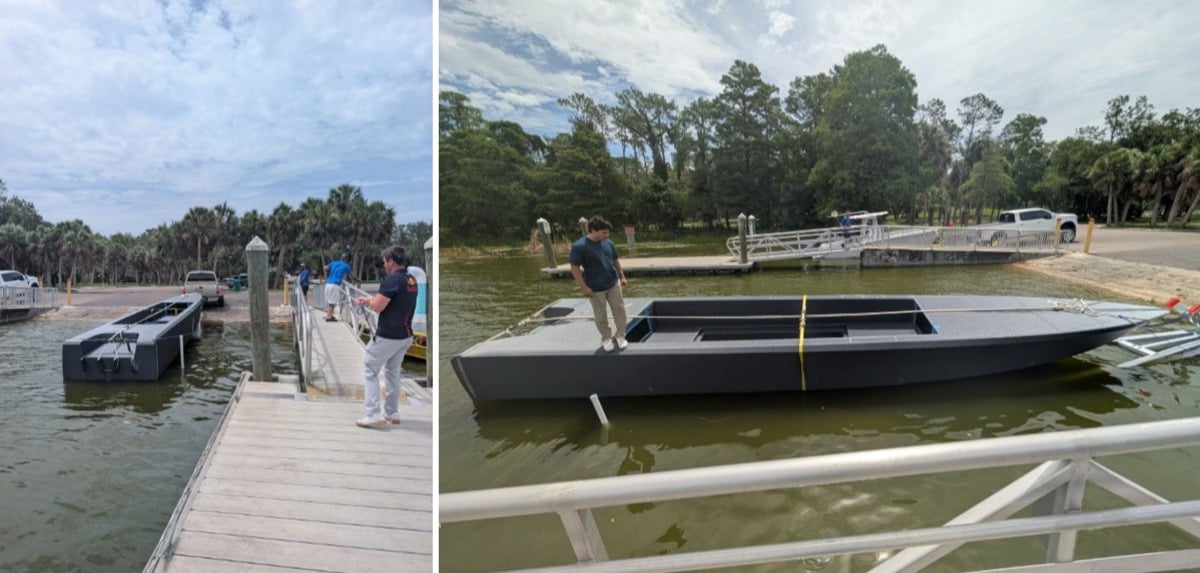
Driving demand for companies like Haddy is the success Ukraine’s inexpensive remotely piloted drone boats have had against Russia’s Black Sea Fleet, repeatedly damaging or destroying far more expensive warships. That track record has pushed American and allied defense planners to prioritize speed and volume over traditional shipbuilding timelines. A design change that would require retooling an entire physical production line in conventional manufacturing can instead be made digitally and printed within days.
Source: defence-blog,com