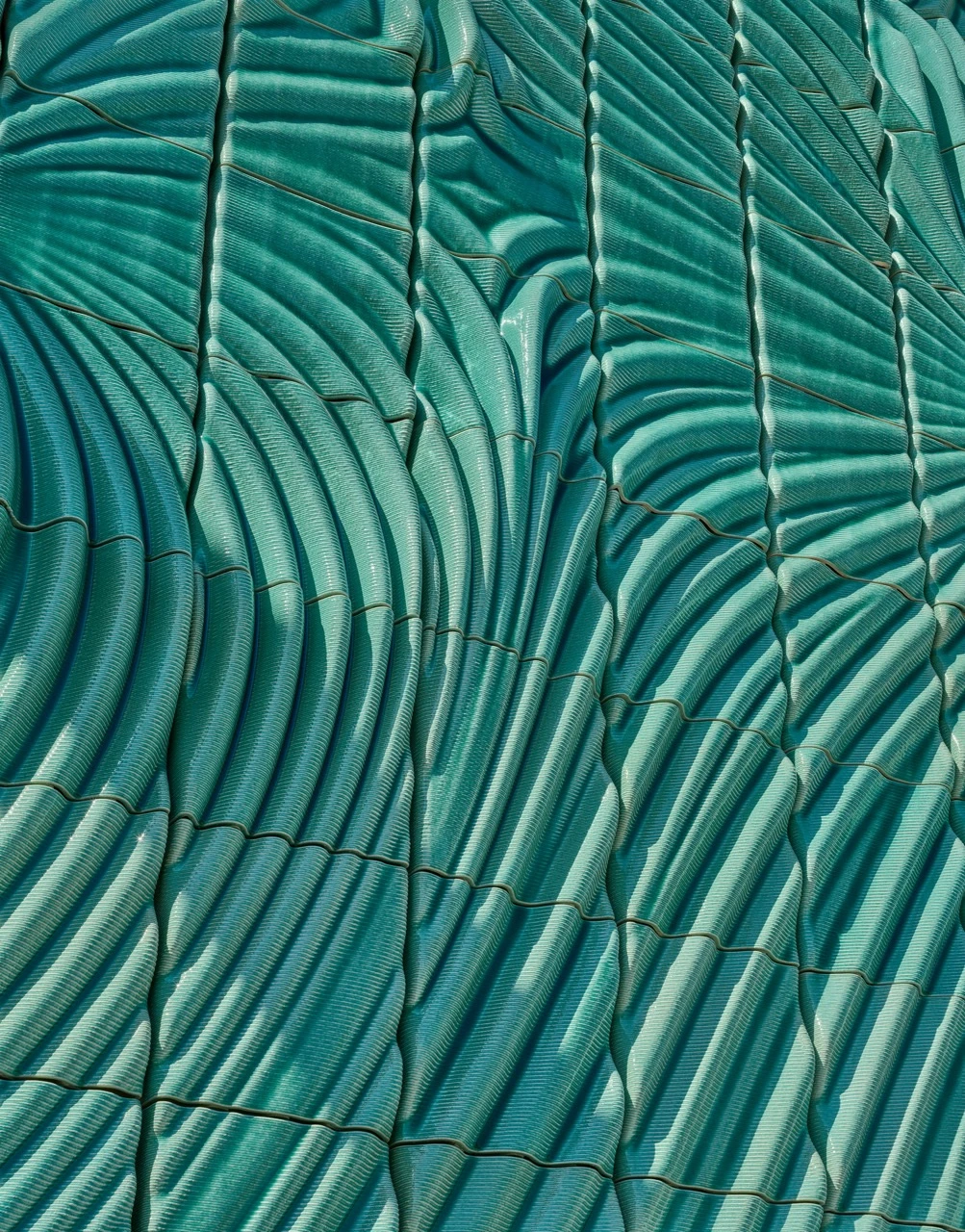


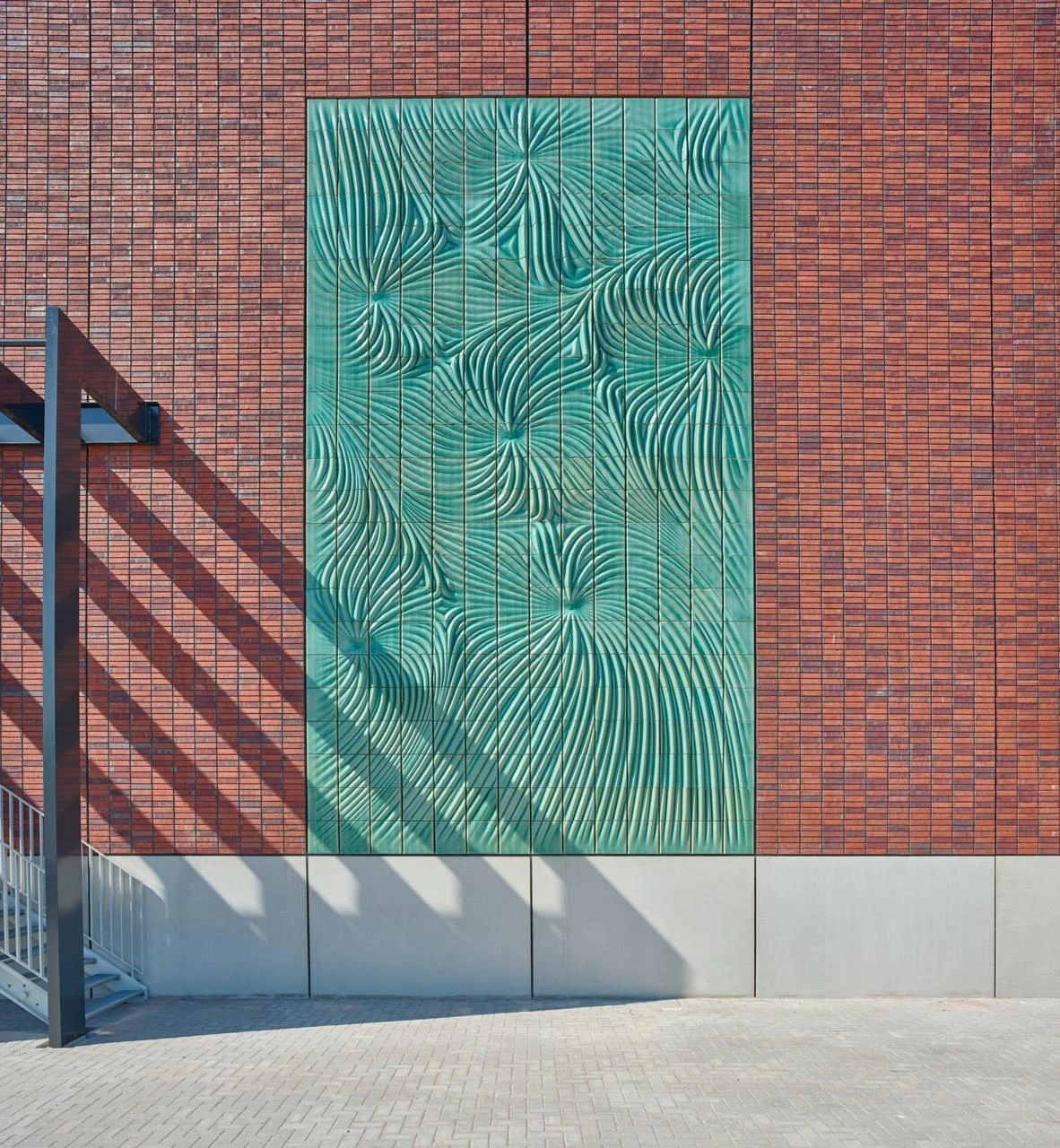
A transformer station in Beverwijk, Netherlands now has an 8-by-5-meter ceramic artwork on its facade, made up of 322 individually designed tiles that were robotically printed at Studio RAP’s workshop in Rotterdam. The client is TenneT, the Dutch grid operator that owns the station. Powerhouse Company designed the building itself; Studio RAP was brought in separately to create the installation.
Production used robotic clay-printing technology, and the studio didn’t hide it. The ridges left by the robotic arm are visible on the finished tiles and were intentionally kept as part of the surface texture. A translucent turquoise glaze covers all 322 components, deepening recesses and edges as daylight shifts across them throughout the day.
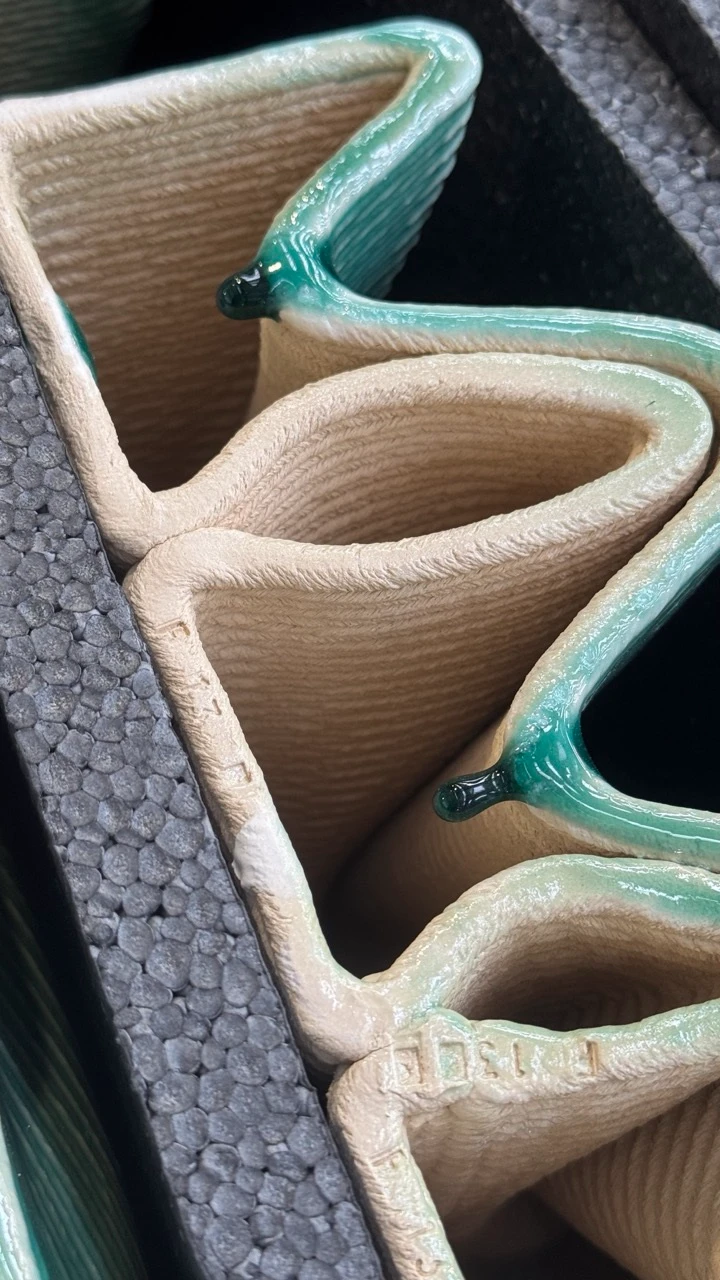
Ceramics don’t behave perfectly in a kiln. Clay shrinks and warps during firing, introducing subtle variations that Studio RAP chose to keep rather than correct. It’s a deliberate balance between the precision of digital fabrication and the unpredictability of the material itself.