

Advertise with us

3D GRAPHY NEWS

  • Home
  • Interviews
    • Text Interviews
    • video Interviews
  • R & D
  • Spotlight
    • Spotlight Text
    • Spotlight Videos
  • Medical
    • Medical Devices
    • Orthotics & Prosthetics
    • Pharma
    • Cardiology
    • Head & Neck
    • Neurology
    • Orthopaedics & Spine
    • Ayurveda
  • Dental
  • Engineering
    • Aerospace & Defence
    • Architecture & Construction
    • Marine & shipbuilding
    • Automotive
    • Energy
    • Heavy Industry
  • 3D Technologies
    • 3D Printing
    • 3D Scanning
    • 3D Software
    • 3D Simulation
    • 3D Design
    • 3D Visualisation
    • 3D Digital Twin
    • Artificial Intelligence
  • Materials
  • LifeStyle
    • Jewellery & Fashion
    • Gadgets
    • Pharma & Food
    • Art & Entertainment
  • About Us
    • About Us
    • Editors Desk
    • 3D Expert Desk
    • End users desk
    • Advertise with us
    • contact-us
  • News & Events
First ads
Second ads
Home» 3D Technologies» Artificial Intelligence»Why agentic AI needs a completely different mobile architecture: the Qualcomm Hexagon NPU

Why agentic AI needs a completely different mobile architecture: the Qualcomm Hexagon NPU

Dr. Shibu John Wed Sep 2026 Artificial Intelligence, News & Events Comments Off on Why agentic AI needs a completely different mobile architecture: the Qualcomm Hexagon NPU 87 Views

Facebook Twitter linkedin Pinterest WhatsAppt Telegram Viber More
What you should know:
  • Agentic AI demands a fundamentally different mobile architecture — one built around specialized models routed by task and context rather than a single massive model — and the foundation for it has to be designed in from the start.
  • Our new Qualcomm Hexagon NPU is built for that shift, led by two moves that matter — a transformer-focused Element Accelerator and a 50% larger shared memory that keeps frequently accessed model data close to the NPU — so agents stay responsive as they juggle longer context, more tools and concurrent tasks.
  • We designed it to run that experience on device: Mixture-of-Experts models that activate a fraction of their parameters per token, a broad INT2–FP16 precision range, and up to 50% faster prefill for INT4 models — bringing responsive, private generative AI to the phone.

The next era of mobile computing will be defined by agents: intelligent systems that understand personal context, operate across applications, reason continuously and take action on your behalf.

As AI becomes more agentic, the winning architecture will not be one massive model handling every task. It will be a system of specialized models, routed intelligently based on the task, the context and the user.

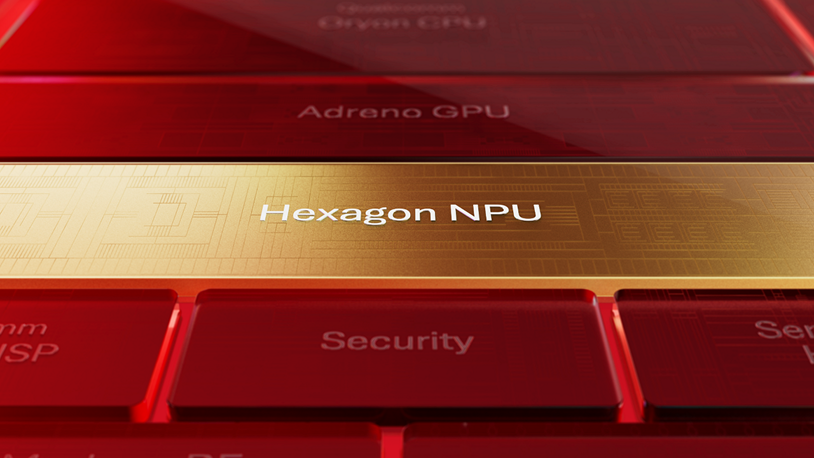
That shift demands more than faster AI inference. It requires a new architecture built for persistent, multimodal, low-latency intelligence. With our next-generation premium mobile platform, Qualcomm Technologies is introducing that foundation, led by the new Qualcomm Hexagon NPU and two standout features: the new Element Accelerator and a much larger shared memory system.

The Element Accelerator is purpose-built for the transformer workloads that power modern generative and agentic AI. Together with the scalar, vector and matrix extensions, it accelerates the operations that matter most for large models, helping agents respond faster, reason more efficiently and deliver richer experiences without compromising mobile power efficiency.

Just as important, our Hexagon NPU significantly expands its large shared memory. A 50% larger NPU memory subsystem allows more model state, activations and intermediate tensors to remain on-chip, minimizing trips to DDR. This reduces memory bottlenecks and delivers faster, more responsive agentic AI experiences.

“With our next-generation premium mobile platform, Qualcomm Technologies is introducing that foundation, led by the new Qualcomm Hexagon NPU and two standout features: the new Element Accelerator and a much larger shared memory system.”

Together, these innovations define the role of the next-generation Hexagon NPU: running more of the agentic AI experience directly on device. The Element Accelerator, vector, matrix and scalar extensions, and larger shared memory work as a collective architecture, helping the NPU accelerate transformer workloads and bring blazing fast agentic experiences to the device.


What the Hexagon NPU delivers

For agents, performance is about keeping intelligence responsive, contextual and efficient across multiple tasks. The Hexagon NPU is designed for always-running AI, long-context reasoning, multimodal models, concurrent agents and low-latency action loops.

Expanded NPU memory capacity allows more model data, activations and intermediate tensors to remain local to the processor, reducing trips to external memory and helping agents answer, revise, plan and act with less waiting. That means richer context windows, faster token generation and a smoother experience as agents move between tools and tasks.

The Element Accelerator further improves performance on the transformer operations that matter most for generative and agentic AI, while vector extensions help drive high-throughput AI math and scalar extensions to support the decision logic, routing and orchestration that agents increasingly require.


Running larger models with less memory bandwidth

The Hexagon NPU is also built for the next generation of model architectures. Qualcomm Technologies is partnering with leading memory and model providers to incorporate a new generation of on-device AI architectures built around Mixture-of-Experts (MoE) models. A 30B-parameter MoE can keep tens of billions of parameters available while activating only about 3B routed parameters for each token generation step on the NPU.

Unlike dense models, which require a much larger portion of the network to participate in every inference step, MoE dynamically selects specialized experts based on the input, reducing active compute and memory bandwidth demands. Combined with intelligent flash-to-memory expert management and caching techniques, this approach enables larger-model-class AI experiences with low power consumption and memory requirements, bringing responsive, private generative AI to phones. MoE models selectively activate specialized expert networks, improving efficiency and quality without invoking an entire model for every request.

“The Hexagon NPU is also built for the next generation of model architectures.”

That approach complements the broader precision strategy. Support for INT2, INT4, INT8, FP8 and FP16 gives developers more flexibility to balance performance, memory, model quality and power. Smaller, more efficient models can handle more local tasks, while larger models can be accessed when the workload truly requires them.

For INT4-based models, the platform delivers up to 50% higher prefill performance, faster decoding throughput, enhanced speculative decoding and higher overall tokens per second. The result is a more immediate on-device AI experience, with agents that feel faster, more capable and more personal.


Built to run agentic AI on device

With the next-generation Hexagon NPU, our latest premium mobile processor is designed to make agentic AI more local, efficient and responsive. It brings together acceleration, memory, precision and model-loading innovations so more intelligence can run close to the user.

At the center of it all is the Hexagon NPU: a collective architecture with the Element Accelerator, vector and scalar extensions, larger shared memory and flash-enabled model loading built to deliver the next generation of on-device AI.

The Agentic Era has arrived. Our next-generation premium mobile processor is built to run it on device.


Source : Qualcomm

Author :  Mr. Vinesh Sukumar, VP, Product Management of AI/GenAI, Qualcomm Technologies, Inc.

2026-09-23
Facebook Twitter linkedin Pinterest WhatsAppt Telegram Viber More

Authors

Posted by : Dr. Shibu John
Previous Article :

AR, VR, MR, and XR – what they mean and how they’ll transform lives

Next Article :

Next Post

Related Articles

Dr. Shibu John Wed Sep 2026
University of Waterloo 3D Prints Diamond-Shaped Electrodes for Flow Batteries

University of Waterloo 3D Prints Diamond-Shaped Electrodes for Flow Batteries

Dr. Shibu John Sat Sep 2026
University of Maine Launches 30-Foot 3D-Printed Offshore Boat

University of Maine Launches 30-Foot 3D-Printed Offshore Boat

Dr. Shibu John Sat Sep 2026
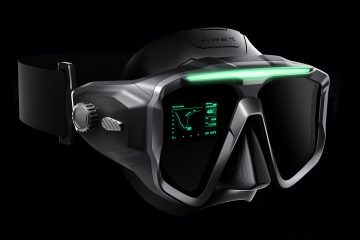
AREX, a new generation of underwater technology, will officially unveil its AI-powered augmented reality dive mask

AREX, a new generation of underwater technology, will officially unveil its AI-powered augmented reality dive mask

Dr. Shibu John Sat Sep 2026
FROM SPARE PARTS TO DIGITAL ASSETS FOR MARINE SECTOR

FROM SPARE PARTS TO DIGITAL ASSETS FOR MARINE SECTOR

Dr. Shibu John Mon Aug 2026
seco
first

Recent Posts

Formlabs Launches Form Studio 1 Resin Printer From $699
3D Printing

Formlabs Launches Form Studio 1 Resin Printer From $699

Dr. Shibu John Fri Oct 2026
TU Delft 3D-Prints a Short Joint Between Stiff and Flexible Lattices
3D Printing

TU Delft 3D-Prints a Short Joint Between Stiff and Flexible Lattices

Dr. Shibu John Thu Oct 2026
Harbin Researchers 3D-Print Cement That Stores Electricity
3D Printing

Harbin Researchers 3D-Print Cement That Stores Electricity

Dr. Shibu John Thu Oct 2026
NTU Researchers 3D Print a Bone Scaffold Timed to How Injuries Heal
3D Printing

NTU Researchers 3D Print a Bone Scaffold Timed to How Injuries Heal

Dr. Shibu John Thu Oct 2026
FibreSeek Opens Pre-Sale of FibreSeeker 3 Continuous Carbon Fibre Printer
3D Printing

FibreSeek Opens Pre-Sale of FibreSeeker 3 Continuous Carbon Fibre Printer

Dr. Shibu John Thu Sep 2026
Divergent Builds America’s Most Advanced Industrial Metal 3D Printer, Monolith One, and Announces Second Factory
3D Printing

Divergent Builds America’s Most Advanced Industrial Metal 3D Printer, Monolith One, and Announces Second Factory

Dr. Shibu John Tue Sep 2026
University of Waterloo 3D Prints Diamond-Shaped Electrodes for Flow Batteries
3D Printing

University of Waterloo 3D Prints Diamond-Shaped Electrodes for Flow Batteries

Dr. Shibu John Sat Sep 2026
University of Maine Launches 30-Foot 3D-Printed Offshore Boat
3D Printing

University of Maine Launches 30-Foot 3D-Printed Offshore Boat

Dr. Shibu John Sat Sep 2026
US Navy Pushes for 3D Printing to Strengthen Submarine Fleet and Industrial Base
3D Printing

US Navy Pushes for 3D Printing to Strengthen Submarine Fleet and Industrial Base

Dr. Shibu John Mon Aug 2026
FROM SPARE PARTS TO DIGITAL ASSETS FOR MARINE SECTOR
3D Digital Twin

FROM SPARE PARTS TO DIGITAL ASSETS FOR MARINE SECTOR

Dr. Shibu John Mon Aug 2026
Queen’s Belfast Team 3D Prints Dissolving Microneedle Patch for Skin Cancer
3D Printing

Queen’s Belfast Team 3D Prints Dissolving Microneedle Patch for Skin Cancer

Dr. Shibu John Sat Aug 2026

Advertisement

Advertisement


htmagazine
3D Graphy news is a information source for 3D Printing and 3d visualisation business

Follow us

Newsletter Subscription

Recent Posts

  • Formlabs Launches Form Studio 1 Resin Printer From $699

    Formlabs Launches Form Studio 1 Resin Printer From $699

    Dr. Shibu John Fri Oct 2026
  • Purposeful porosity: A peek into PermiAM technology

    Purposeful porosity: A peek into PermiAM technology

    Dr. Shibu John Sat Oct 2026
  • SHINING 3D Launches ShiningSpace, a Browser Platform for Real-World 3D Scans

    SHINING 3D Launches ShiningSpace, a Browser Platform for Real-World 3D Scans

    Dr. Shibu John Thu Oct 2026

Random Posts

Formlabs Launches Form Studio 1 Resin Printer From $699

TU Delft 3D-Prints a Short Joint Between Stiff and Flexible Lattices

Harbin Researchers 3D-Print Cement That Stores Electricity

NTU Researchers 3D Print a Bone Scaffold Timed to How Injuries Heal

FibreSeek Opens Pre-Sale of FibreSeeker 3 Continuous Carbon Fibre Printer

Divergent Builds America’s Most Advanced Industrial Metal 3D Printer, Monolith One, and Announces Second Factory

University of Waterloo 3D Prints Diamond-Shaped Electrodes for Flow Batteries

University of Maine Launches 30-Foot 3D-Printed Offshore Boat

US Navy Pushes for 3D Printing to Strengthen Submarine Fleet and Industrial Base

FROM SPARE PARTS TO DIGITAL ASSETS FOR MARINE SECTOR

Advertise with us Join Our WhatsApp Group
© Copyright 2024-30, All Rights Reserved
Powered by 3D GRAPHY LLP