

A Special Detailed Report by 3D GRAPHY NEWS
The pharmaceutical industry is standing at the threshold of a major transformation.
For decades, pharmaceutical innovation has focused on discovering molecules, developing formulations, conducting clinical trials and manufacturing medicines at scale. The next transformation could be different: using 3D Printing, 3D Visualisation and Artificial Intelligence-enabled Digital Twins to design, simulate, personalise and manufacture therapies around the individual patient.
These technologies should not be viewed independently. Their greatest potential lies in their convergence.
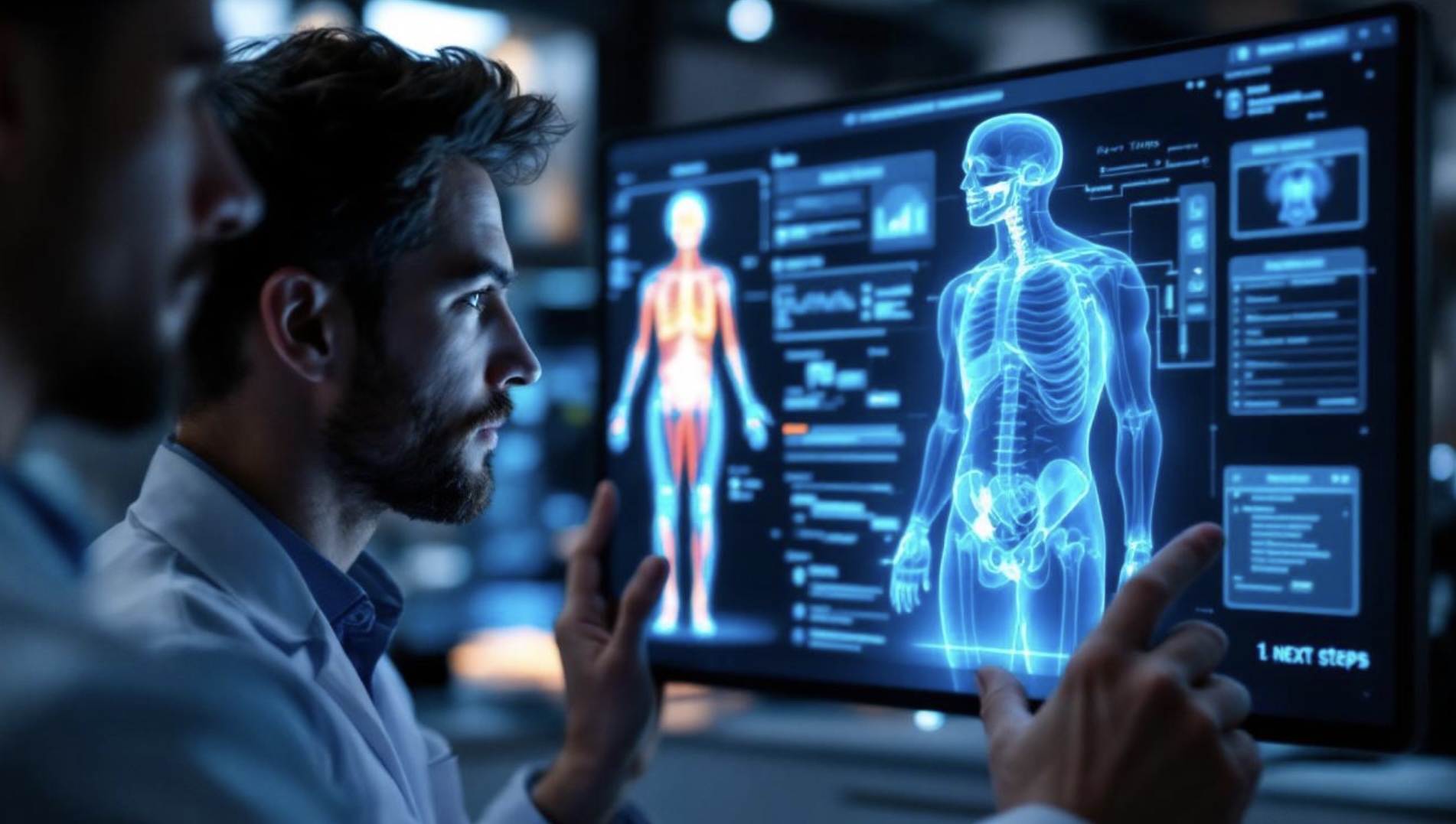
3D Visualisation can help us see and understand.
Artificial Intelligence can help us analyse and predict.
Digital Twins can help us simulate.
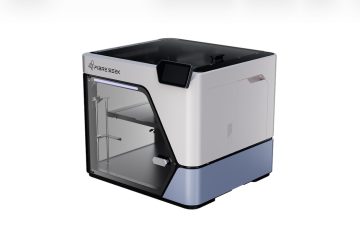
3D Printing can help us physically manufacture the solution.
Together, they could establish a new digital-to-physical pathway for pharmaceutical development and personalised medicine.
Recent research is already examining the integration of AI, 3D printing and pharmacogenomics across the drug-development-to-delivery process, while 2026 reviews identify digital twins as a potential technology spanning pharmaceutical R&D, manufacturing and personalised care.
From “One-Size-Fits-All” to “Designed for the Patient”
Conventional pharmaceutical manufacturing is extraordinarily successful at producing standardised medicines in enormous volumes. But the patient is not standardised.
Age, body weight, genetics, metabolism, organ function, disease progression, drug interactions and treatment response can differ significantly between individuals.
This raises an important question:
Why should every patient necessarily receive the same formulation, dose and release profile?
3D printing introduces the possibility of manufacturing dosage forms with digitally controlled geometry, internal structures, materials and drug distribution.
A 2026 review on AI-enabled personalised oral drug delivery describes a pathway in which patient-specific data can inform dose prediction and formulation design, with 3D printing potentially enabling on-demand production of personalised medicines.
This could move pharmaceutical manufacturing from:
Mass production → Mass personalisation

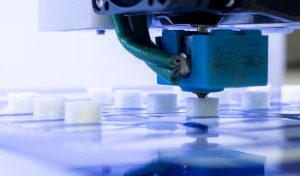
The Three Technologies Creating a New Pharmaceutical Ecosystem
1. 3D Visualisation — Seeing the Medicine and the Patient
3D Visualisation can provide a spatial understanding of anatomy, tissues, organs, pathological structures, drug-delivery systems and biological processes.
For pharmaceutical R&D, this could support visual exploration of complex relationships that are difficult to understand through conventional two-dimensional data alone.
Imagine a future platform where researchers can visually examine:
- Tumour microenvironments
- Drug distribution
- Tissue penetration
- Organ-specific responses
- Drug-release pathways
- Cellular interactions
- Patient-specific anatomy
- Drug-device interactions
The objective is not simply to create attractive 3D graphics.
The objective is to turn complex pharmaceutical and biological data into something researchers and clinicians can understand, interrogate and simulate.
2. Artificial Intelligence — Turning Data into Intelligence
AI can become the intelligence layer connecting enormous amounts of pharmaceutical and patient data.
Potential applications include:
- Drug-target identification
- Molecular design
- Formulation optimisation
- Dose prediction
- Drug-drug interaction analysis
- Toxicity prediction
- Patient stratification
- Clinical-trial optimisation
- Manufacturing optimisation
- Quality monitoring
- Drug-release prediction
AI is already receiving significant attention across drug discovery and formulation development, although experts continue to emphasise the gap between promising computational performance and demonstrated clinical impact.
That distinction is important.
AI should not be presented as a replacement for pharmaceutical science. It should become a powerful decision-support and optimisation layer working alongside scientists, clinicians and regulators.
3. AI-Enabled Digital Twins — Creating a Dynamic Virtual Patient
The most transformative opportunity may be the development of AI-enabled Digital Twins.
A pharmaceutical or healthcare Digital Twin can represent a physical system digitally and continuously incorporate relevant data.
In precision pharmacotherapy, emerging models combine clinical information with pharmacokinetic/pharmacodynamic modelling, genomic information and potentially real-time monitoring to support more individualised treatment decisions.
This introduces a powerful concept:
What if we could simulate aspects of a patient’s response to a medicine before deciding how that medicine should be delivered?
A Digital Twin could potentially help researchers and clinicians explore different scenarios:
Drug A + Patient Profile → predicted response
Drug B + Patient Profile → predicted response
Dose 1 → predicted exposure
Dose 2 → predicted exposure
Release Profile A → predicted outcome
Release Profile B → predicted outcome
The ultimate objective would be to make treatment decisions increasingly data-driven, patient-specific and adaptive.
3D Printing: Converting Digital Intelligence into Physical Medicine
This is where 3D printing becomes particularly important.
AI and Digital Twins can generate information.
3D Visualisation can represent it.
But pharmaceutical treatment ultimately needs a physical product.
3D printing provides a potential bridge between the digital world and the physical medicine.
Researchers are investigating how 3D printing can control dosage-form geometry, materials and multi-material structures to influence drug-release behaviour. A 2026 review highlights AI-guided design and point-of-care manufacturing as emerging directions in pharmaceutical 3D printing.
This could enable:
Digitally Designed → Simulated → Validated → 3D Printed Medicines
The concept is significantly larger than simply “printing tablets.”
The Customised Tablet: A New Pharmaceutical Possibility
One of the most interesting opportunities is the patient-specific 3D-printed dosage form.
Imagine a patient requiring several medicines with different release requirements.
Instead of taking multiple conventional tablets, future systems could potentially create a digitally designed dosage form incorporating different medicines or release regions.
The geometry and internal architecture could be engineered to influence:
- Dose
- Drug combination
- Dissolution
- Release rate
- Release location
- Timing of release
This is particularly relevant to the development of personalised oral medicines.
The concept of AI-guided formulation design combined with 3D printing is now being actively discussed in pharmaceutical research.
The future possibility:
One patient → One digital formulation → One customised dosage form
That is a fundamental departure from conventional mass-produced medication.
Dermatology: A Major Opportunity for Personalised Treatment
Dermatology could become one of the most interesting early application areas.
Skin diseases vary significantly in location, severity, depth and patient response.
3D technologies could potentially enable the creation of customised topical or transdermal drug-delivery structures based on patient-specific requirements.
The opportunity extends beyond the medicine itself.
3D visualisation could help map the affected region.
AI could analyse patient and disease data.
A Digital Twin could potentially model treatment scenarios.
3D printing could manufacture the customised delivery structure.
Recent research from India also illustrates how pharmaceutical-grade materials are being investigated for 3D-printed skin scaffolds and customised drug delivery, although such work remains at the research stage rather than representing routine clinical practice.
This is precisely the kind of intersection that deserves greater exploration.
Surgeons and Patient-Specific Drug Delivery
The convergence becomes even more interesting when pharmaceutical technologies meet surgery.
Modern medical imaging already allows clinicians to create highly detailed representations of patient anatomy.
3D Visualisation can transform that information into a spatial model.
3D Printing can transform the digital model into a physical object.
The next step could be connecting that ecosystem with drug delivery.
Potential future areas include:
- Patient-specific drug-eluting implants
- 3D-printed drug-delivery devices
- Drug-loaded scaffolds
- Controlled local drug release
- Post-operative personalised therapy
- Tissue-engineering constructs
- Patient-specific therapeutic devices
This could create a new relationship between surgery, pharmaceutical science and additive manufacturing.
Instead of asking only:
“Which drug should the patient receive?”
the question could increasingly become:
“How should the drug be delivered for this particular patient and this particular clinical situation?”
Drug Testing Could Enter a New Digital Era
Drug development is expensive, lengthy and carries significant uncertainty.
Digital Twins could potentially provide an additional layer of simulation across the development lifecycle.
A 2026 review in Drug Discovery Today describes potential Digital Twin applications from target discovery and preclinical research through clinical trials, regulatory review, manufacturing and post-market practice.
This could create a future drug-development architecture:
Molecular Data
↓
AI Analysis
↓
3D Biological Visualisation
↓
Virtual Patient / Digital Twin
↓
Drug & Formulation Simulation
↓
Laboratory Validation
↓
Clinical Validation
↓
3D-Printed or Conventionally Manufactured Medicine
↓
Patient Data
↓
Digital Twin Updated
This creates a continuous learning loop rather than a linear pharmaceutical process.
Digital Twins Could Connect Pharma R&D and Clinical Practice
Perhaps the most important opportunity is that Digital Twins could eventually connect two worlds that are often treated separately:
Pharmaceutical R&D
and
Patient Care
In pharmaceutical development, Digital Twins could support modelling, development and manufacturing.
In clinical practice, patient-specific Digital Twins could potentially support precision dosing, treatment optimisation and medication management.
Recent work specifically examining Digital Twins in precision pharmacotherapy highlights applications including precision dosing, polypharmacy management and optimisation of complex therapies, while also emphasising validation, governance, explainability and regulatory requirements.
This could create a continuous pharmaceutical intelligence ecosystem:
Discovery → Development → Manufacturing → Treatment → Monitoring → Learning
The Point-of-Care Pharmaceutical Factory
One of the most disruptive possibilities is decentralised pharmaceutical manufacturing.
Today, pharmaceutical products are generally manufactured centrally and distributed through a complex supply chain.
In the future, selected medicines could potentially be digitally manufactured closer to the point of care, subject to regulatory approval, validated processes and appropriate quality systems.
A hospital or specialised pharmaceutical facility could potentially receive:
Patient Data → Digital Prescription → Validated Digital Manufacturing File → 3D Printing → Quality Verification → Patient-Specific Medicine
This does not mean that every hospital will become a pharmaceutical factory.
Rather, it suggests the possibility of highly flexible, validated manufacturing environments capable of producing selected personalised dosage forms when clinically justified.
The Pharmaceutical Industry’s “Unseen Territory”
The real opportunity is therefore not any single technology.
It is the convergence.
3D Printing
Creates the physical product
3D Visualisation
Creates the spatial understanding
Artificial Intelligence
Creates intelligence from data
Digital Twin
Creates a dynamic simulation environment
Pharmaceutical Science
Provides the scientific foundation
Clinical Medicine
Defines the patient’s need
Together:
AI + Digital Twin + 3D Visualisation + 3D Printing = A New Digital Pharmaceutical Paradigm
This is an emerging field rather than an established clinical standard. Many applications remain experimental, and significant regulatory, quality, interoperability, data-security and clinical-validation challenges remain.
But that is precisely why it represents an unseen territory to explore.
What India Should Explore
India has an unusual strategic opportunity.
It already possesses:
- A globally significant pharmaceutical industry
- Strong academic institutions
- Growing AI capabilities
- Medical technology expertise
- Additive manufacturing capabilities
- A large healthcare ecosystem
- Increasing interest in personalised medicine
- A growing digital-health infrastructure
The next step could be to bring these communities together.
A National Research and Innovation Framework could explore:
AI for Drug Discovery
3D Visualisation for Pharmaceutical R&D
Digital Twins for Drug Development
AI-Based Formulation Design
3D-Printed Personalised Dosage Forms
Digital Twins for Precision Pharmacotherapy
3D-Printed Drug-Delivery Systems
Personalised Dermatological Drug Delivery
Patient-Specific Drug-Eluting Implants
Point-of-Care Pharmaceutical Manufacturing
AI + 3D Printing Quality Control
Digital Manufacturing Standards and Regulatory Frameworks
Such a programme would require collaboration among pharmaceutical companies, hospitals, IITs, medical colleges, technology companies, AI developers, additive-manufacturing companies, pharmacists, clinicians and regulators.
Regulation Will Determine How Fast the Future Arrives
Technology alone will not determine the success of pharmaceutical 3D printing and Digital Twins.
The industry will need answers to fundamental questions.
Who approves a patient-specific 3D-printed medicine?
How is a digitally generated formulation validated?
How do we guarantee dose accuracy?
How do we validate AI-generated recommendations?
How should Digital Twins be clinically qualified?
Who owns the patient’s Digital Twin?
How are pharmaceutical manufacturing files secured?
How do we prevent unauthorised modification of a digital prescription?
How do we maintain traceability?
How do we establish quality assurance for decentralised production?
These are not obstacles that should stop innovation.
They are research priorities that must be addressed alongside innovation.
From Digital Data to Physical Medicine
The pharmaceutical industry is entering an era in which the distinction between software, biology and manufacturing is becoming increasingly blurred.
A patient’s medical information can become data.
Data can become an AI model.
The AI model can inform a Digital Twin.
The Digital Twin can inform a treatment simulation.
The simulation can inform formulation design.
The formulation can become a digital manufacturing instruction.
And 3D printing can potentially turn that instruction into a physical therapeutic product.
This is the digital-to-physical pharmaceutical loop.
3D GRAPHY NEWS Perspective
The pharmaceutical industry has spent decades asking:
How can we discover and manufacture medicines at scale?
The next question could be:
How can we design and manufacture the right medicine, in the right form, at the right dose, for the right patient?
That is where 3D Printing, 3D Visualisation and AI-enabled Digital Twins could become transformational.
The future is unlikely to be about replacing pharmaceutical scientists, pharmacists, dermatologists, surgeons or physicians with technology.
It is about giving them better tools to understand complexity, simulate possibilities and personalise treatment.
The convergence of these technologies could ultimately move pharmaceutical innovation from mass production toward intelligent personalisation.
And perhaps the most exciting opportunity is that this journey has only begun.
The pharmaceutical industry has explored molecules, formulations and manufacturing for generations.
Now it is time to explore the space between the digital patient, the intelligent Digital Twin and the 3D-printed medicine.
That is the unseen territory.
And it is waiting to be explored.

Dr. Shibu John,
CEO & Founder, 3D Graphy Llp
Managing Editor & Founder, 3D Graphy News
— Special Report on the Future of Pharmaceutical Technology